

 myCSUSM






Ricardo D. Fierro
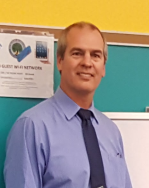
Ricardo D. Fierro, Ph.D.
Email: fierro@csusm.edu
Ph.D., Mathematics, University of California, San Diego
B.S., Mathematics, University of California, Davis
ACADEMIC EMPLOYMENT
CSUSM
- Associate Dean, College of Science, Technology, Engineering, and Mathematics. 06/12 to present
- Acting Chair of Computer Science and Information Systems. 01/14 to 01/15
- Chair of Mathematics. 03/09 to 06/12
- Professor of Mathematics. 08/03 to present
- Associate Professor of Mathematics. 08/97 to 07/03
- Assistant Professor of Mathematics. 08/92 to 07/97 (with postdoctoral leave, 08/92 – 07/93)
- Postdoctoral Fellowship, Depts of Mathematics & Electrical Engineering, UCLA. 08/92 to 07/93.
Truly, it is not knowing but learning,
not possessing but acquiring,
not being there but getting there,
which yields the greatest enjoyment.- Carl Friedrich Gauss, 1808
Project Director
HSI-STEM grant from the U.S. Dept of Education (2016-2021)
Award Number P031C160078, “Sí Se Puede! To Close the Equity Gap in Engineering Degree
Completion”
Project Director duties:
- Recruit and hire personnel for the grant.
- Communicate goals and objectives to project and college personnel.
- Lead the weekly Engineering Team meetings.
- Lead and support the Engineering Team, including providing pertinent research literature
to identify “what works,” to plan, develop, implement, assess, and revise initiatives
to meet the goals of the grant:
- Goal 1. Develop innovative degree programs in software engineering and electrical engineering based on principles of guided pathways that close outcome gaps for Hispanic and other underserved students;
- Goal 2. Develop a fully articulated engineering curriculum and transfer pathway between CC partners and CSUSM;
- Goal 3. Build and support an educational ecosystem focused on systematic improvement and equitable student success and completion through sustainable institutionalization of evidence-based practices.
- Ensure that the grant activities promote diversity, equity, and inclusiveness to support the students and create an intentional and sustainable ecosystem that can be modeled by other departments, including student sense of belonging, early identity as an engineer, and retention.
- Monitor the progress of the grant activities toward meeting the goals and objectives of the grant.
- Attended workshops for Project Directors sponsored by the Department of Education.
- Hired faculty to create sample quizzes and tests for a few gateway courses.
- Participate with the Engineering Team at recruiting activities at CSUSM and partner 2-year institutions.
- Collaborate with partner 2-year institutions for articulation agreements and guided transfer pathways, including a retreat and subsequent meetings with faculty.
- The Engineering Team developed an “ecosystem for student success” based on best practices and the literature which we continue to monitor and improve each year.
- Administer the budget in alignment with the goals and objectives of the grant and campus and federal guidelines. Includes reviewing and confirming the necessity and reasonableness of budget requests and authorizing budget expenditures. Includes timely expenditures and strategically reallocating carry forwards.
- Maintain professional relationship and regular communication with the Department of Education Program Officer.
- Submit monthly reports to the Program Officer based on synthesizing monthly reports from members of the engineering team.
- Submit annual reports to the Department of Education Program Officer, resulted in successful annual renewals of the grant without any concerns or warning flags. Includes working with campus entities such as Office of Sponsored Projects for grant expenditures and Institutional Planning & Analysis to secure benchmark data for the reports.
Mind Map on Sense of Belonging. Presented to students participating in the “Empowering Engineers for Success” workshop, using the Firefox or Microsoft Edge browser. Topics covered: What It Is; Why It Matters; Benefits; How to Promote it; High Impact Practices.
Training for new Chairs in CSTEM, 3-day workshops. Towards a job description for Chairs; Dean Speak 101: FTES, WTUs, FTEF; Measuring faculty workload; Academic calendar and schedule preparation timeline; Procedure for hiring lecturers; Entitlements: why they are important and how they are earned with various scenarios; Types of appointments for lecturers, careful consideration, preference for available temporary work; Periodic evaluation of lecturers; Primary and professional responsibilities of faculty; Limitation on additional employment; Useful PeopleSoft data queries and how to access them; Department budget allocation letter, department IDs, funds types; Budget basics, sample budget report and shadow reconciliation, sample budget summary by account name and fund manager; Funds from Extended Learning; Guidelines for the proper use of lottery funds; Guidelines for hiring students and teaching associates; Position description of academic support coordinators; Classification and qualification standards for employees; FAQs for reclassification; Advising roles; Cougar Care Network; Travel approval or prepaid registration form; How lead workers and staff should interact & How faculty and staff should interact; Staff evaluations; Different types of student employees and their typical duties.
EXCEL ANALYTICS TOOLS
To democratize data and solve worthwhile problems to inform and/or inspire change
- CSUSM Space Utilization. Developed a visualization of the utilization of lecture spaces on campus for wild card meeting patterns. IMPACT: Used by Academic Affairs to generate support for modifying course meeting patterns to improve space utilization and mitigate an imminent space availability crisis.
- Puzzling Worksheet. Developed a worksheet to help staff puzzle rooms to meet SUAM guidelines for space utilization to help fill classrooms with courses. IMPACT : Assists staff to assign courses to classrooms to meet metrics for scheduling classrooms, ensuring proposed courses meet approved meeting patterns and times; and reducing the number of errors in scheduling audits.
- Entitlements Worksheet. Corrected the formulas for the contract types in the entitlements worksheet for lecturers to handle all possible cases. Tested and approved by Faculty Affairs and intended for all colleges to maintain and track their entitlements database. IMPACT: Accurately tracks entitlements. Expanded the file by making it easy to include new lecturers, insert new academic year entitlements for continuing lecturers; includes the timetable from Faculty Affairs for lecturer evaluations.
- Enrollment Summary and Lecturer Budget. Rewrote the CSTEM enrollment summary to correct formula flaws and used advanced Excel capabilities to reduce repetitive manual labor for maintaining the file. Pivot tables summarize course enrollment and waitlists, faculty assignments/workload, and unassigned courses. Applied formulas and look-up tables to track the lecturer budget. Adapted to all colleges. IMPACT: Significantly reduced the workload in maintaining the accuracy of the file, much easier to remember how to use and maintain. Accurately tracks the instructional budget and workload of all instructors, useful for reimbursement for reassigned time and contract preparation. Presented to CSTEM Chairs and Associate Deans and in a workshop through IITS Tech Bites workshop series, Spring 2021. Also presented the Enrollment Summary in the New Faculty Institute to new Chairs, August 2021.
- Dashboard for first-time students (D4FTS). Created a dashboard for monitoring enrollment of first-time freshmen and transfer students, who arrive on campus with limited information. IMPACT: Quickly identifies the schedule for first-time students and their enrollment intensity, especially useful for easily contacting under enrolled students. Presented to CSTEM Chairs, Associate Deans, Degree Set Go committee, Advising Council, and presented in a workshop through the Faculty Center.
- Analysis of DFW rate for MATH 101. Developed a model with a “what-if” analysis that verifies that MATH 101 is more effective than the Pre-E0 1110 remediation pathways for non-math proficient students for earning B4 credit. IMPACT: Quantifies that MATH 101 is more effective than previous remediation pathways for earning B4 credit, encourages the campus to provide resources to reduce the high DFW rate for MATH 101. Presented to CSTEM Chairs and Degree Set Go committee.
Teaching. I've taught a variety of lower-division, upper-division, and graduate courses:
- Math 210 Mathematics for Elementary Teaching I
- Math 212 Mathematics for Elementary Teaching II
- Math 311 Mathematics for Elementary Teaching III
- Math 115 College Algebra
- Math 132 Survey of Calculus
- Math 242 Probability Modeling and Inferential Statistics
- Math 350 Foundations for Theoretical Mathematics
- Math 370 Discrete Mathematics
- Math 374 Linear Algebra
- Math 410 Modern Geometry
- Math 464 Numerical Analysis and Computing
- Math 470 Modern Abstract Algebra
- Math 480 Introduction to Optimization
- Math 560 Optimization Theory and Applications
- Math 561 Computational Linear Algebra
Sabbatical. I spent a sabbatical leave teaching K-6 students at local elementary schools, including a third grade class with Mrs. Emme, a fourth-fifth grade combination class with Mrs. Roncaglia, and two sixth grade classes with Mrs. Smith and Mrs. Dugger. It was an intensive opportunity to develop, test, and refine techniques, based on classroom experiences as well as recommendations from the literature, for helping students learn math content. The elementary school teachers I've worked with continue to welcome me to their classrooms to teach their students. These past and present experiences help establish a stronger connection between the elementary classroom and the college classroom while teaching prospective elementary school teachers.
TEXTBOOK AUTHOR:

- R. D. Fierro. Mathematics for Elementary School Teachers. Cengage Learning, © 2013, ISBN 9780538493635. College textbook, sole author, 13 chapters (976 pages), appendices and bibliography. Six-year effort from 2006-2012. Covers the five strands of mathematics in the elementary curriculum: numbers and operations, algebra and functions, data analysis and probability, measurement, and geometry. Based on several hundred hours of experience teaching elementary school students, a sabbatical leave spent teaching in local elementary schools, fifteen years of teaching prospective teachers in the college classroom, published research of talented K-8 teachers and college educators, National Council of Teachers of Mathematics Standards and Common Core State Standards that describe what teachers should know and be able to do, and valuable feedback from reviewers.
- Instructor's Resource Manual (557 pages, co-author S. Fallstrom, © 2013). ISBN 9781133363729
- Student Solutions Manual (119 pages, co-author S. Fallstrom, © 2013). ISBN 9781133363743
- Activity Manual (100 pages, co-author R. Kress, © 2013). ISBN 9781133363712I joined the Dept of Mathematics in 1992, but took a leave of absence for a postdoc at UCLA for one year. I published numerous joint articles in numerical analysis & co-authored two MATLAB software packages.
REFEREED PUBLICATIONS
- Fierro, R.D. and Jiang, E. (2005). Lanczos and the Riemannian SVD in information retrieval applications, Numerical Linear Algebra with Applications, 12, pp. 355-372.
- Fierro, R.D. and Hansen, P.C. (2002). Recent developments in rank revealing and Lanczos methods for TLS-related problems; in S. Van Huffel and P. Lemmerling (Eds.), Total Least Squares and Errors-in-Variables Modeling: Analysis, Algorithms, and Applications, Kluwer Academic Publishers, pp. 47-56.
- Fierro, R.D. and Hansen, P.C. (2002). Truncated VSV Solutions to Symmetric Rank-Deficient Problems, B.I.T., 42, pp. 531-540.
- Fierro, R.D. (2001). Lanczos, Householder transformations, and implicit deflation for fast and reliable dominant singular subspace computation, Numerical Linear Algebra and Its Applications, 8, pp. 245-264.
- Vanhamme, L., Fierro, R.D., Van Huffel, S., and de Beer, R. (1998). Fast removal of residual water in proton spectra, J. Magnetic Resonance, 132, pp. 197-203.
- Fierro, R.D. and Hansen, P.C. (1997). Low rank revealing two-sided orthogonal decompositions, Numerical Algorithms, 15, 37-55.
- Fierro, R.D., Golub, G.H., Hansen, P.C., and O’Leary, D.P. (1997). Regularization by truncated total least squares, SIAM J. Scientific Computing, 18, pp. 1223-1241.
- Fierro, R.D. (1996). Perturbation theory for two-sided (or complete) orthogonal decompositions, SIAM J. Matrix Analysis and Applications, 17, pp. 383-400.
- Berry, M.W. and Fierro, R.D. (1996). Low-rank orthogonal decompositions for information retrieval applications, Numerical Linear Algebra with Applications, 3, pp. 301-327.
- Fierro, R.D. and Bunch, J.R. (1996). Perturbation theory for orthogonal projection methods with applications to least squares and total least squares, Linear Algebra and Its Applications, 234, pp. 71-96.
- Fierro, R.D. and Bunch, J.R. (1996). Bounding the subspaces obtained by rank revealing two-sided orthogonal decompositions, SIAM J. Matrix Analysis and Applications, 3, pp. 743-759.
- Fierro, R.D. and Bunch, J.R. (1995). Orthogonal projection and total least squares, Numerical Linear Algebra with Applications, 2, pp. 135-153.
- Fierro, R.D. and Hansen, P.C. (1995). Accuracy of TSVD solutions computed from rank revealing decompositions, Numerische Mathematik, 70, pp. 453-471.
- Fierro, Ricardo & Bunch, James. (1994). Collinearity and Total Least Squares. SIAM Journal on Matrix Analysis and Applications. 15, pp. 1167-1181.
- Bunch, J.R. and Fierro, R.D. (1992). A constant false alarm rate algorithm, Linear Algebra and Its Applications, 172, pp. 231-241.
REFEREED SOFTWARE PUBLICATIONS
freely available at Numeralgo
- Fierro, R.D., Hansen, P.C., and Hansen, P.S. UTV Tools: MATLAB templates for rank revealing UTV Decompositions, Numerical Algorithms, 20 (1999), pp.165-194.
(contents: 46 MATLAB functions, 8 demos, 97-page User’s Guide). - Fierro, R.D. and Hansen, P.C. UTV Expansion Pack: Special-Purpose Rank-Revealing Algorithms,
Numerical Algorithms, 2005. (contents: 34 MATLAB functions, 3 demos, 68-page User’s Guide).
A FEW ACTIVITIES
- Completed three training sessions for Burning Glass Labor Insights and Burning Glass Program Insights, toward closing the gap between curriculum and careers. (Jan and Feb 2021).
- Attended webinar “How NC State University is using Burning Glass data to revolutionize how students see the value of degrees.” (Feb 2021)
- CSU Student Success Analytics Certificate Program. Engage in a cross-functional learning community; Hear from experts in equity-minded analytics; Learn strategies for moving insight to action; Implement an equity-focused action research project.
- Principles for Leadership in Higher Education (Feb 17 – Mar 17, 2021; online bootcamp
+ success coaching through Academic Impressions). Fifteen (15) hours of training plus
homework/preparation.
Principle 1. Model the Way (clarify your values, understand the shared values of the group, set the example by aligning action with shared values). Principle 2. Inspire a Shared Vision (find common purpose and opportunities). Principle 3. Challenge the Process (look or innovative ways to improve the process). Principle 4. Enable Others to Act (build trust, enable others to act). Principle 5. Encourage the Heart (recognize contributions, show appreciation). - Presentation on a mind map for Sense of Belonging to the Office of Success Coaches,
April 9, 2021. Mind map using the Firefox or Microsoft Edge browser.
Topics covered: What It Is; Why It Matters; Who Benefits; How to Promote it; High Impact Practices - Prepared a Program Assessment Report for the undergraduate program in Mathematics. Extensive effort included designing a rubric for assessing “proof and reasoning” student learning outcome, analyzing data including statistical analysis, and writing a report, 2007.
- Prepared a Program Assessment Report for the graduate program in Mathematics. Extensive effort included designing a rubric for assessing “proof and reasoning” student learning outcome, analyzing data including statistical analysis, and writing a report, 2007.
- Prepared a Program Assessment Report for the undergraduate program in Mathematics. Extensive effort included designing a rubric for assessing “written communication” student learning outcome, and writing a report, 2008.
- Prepared a Program Assessment Report for the graduate program in Mathematics. Extensive effort included designing a rubric for assessing “verbal communication” student learning outcome, and writing a report, 2008.
- Lead author for extensive program evaluation and planning (self study) reports (AY04/05 and AY06/07) along with documentation (called the Data Notebook) for the Department of Mathematics with the assistance of the math faculty. This extensive and collaborative effort involved guiding the math faculty (without course release) to: design student learning outcomes; develop a matrix that shows the relationship between student learning outcomes and undergraduate and graduate courses; consider improvements to the graduate program; consider readiness of incoming freshmen to begin lower division coursework in the major, as well as transfer students to begin upper division coursework; analyze enrollment trends in the number of majors using data from the Office of Analytic Studies; describe relations that program faculty have with counterparts at local high schools, community colleges, and nearby four-year institutions used to improve the readiness of arriving students; examine Student/Alumni survey results; apply recommendations of the publication The Mathematical Education of Teachers by the Conference Board of the Mathematical Sciences (CBMS) to ensure our courses (namely abstract algebra, analytic geometry in calculus, analysis, probability and statistics, discrete mathematics) are aligned with the CBMS recommendations; delineate the sequence of courses a well prepared prospective graduate student should know before entering a competitive doctoral program; reflect on the quality and quantity of student contact with the program faculty; implement measures to ensure timely academic progress of students; judge how research and creative activities of the program faculty manifest themselves in the academic degree program; mull about the adequacy of library and computing resources for achieving student learning outcomes; and outline strengths and weakness in the mathematics course offerings. Major undertakings.