

 myCSUSM






Student Resources
- Affirmative Consent
Affirmative Consent: must be voluntary, and given without coercion, fource, threats, or intimidation. It is the responsibility of each person involved in the sexual activity to ensure Affirmative Consent has been obtained from the other participants(s) prior to engaging in the sexual activity.
Affirmative Consent means an agreement to engage in sexual activity that is;
- Informed;
- Affirmative;
- Conscious;
- Voluntary, and Mutual;
- Lack of protest or resistane does not mean there is Affirmative Consent;
- Silence does not mean there is Affirmative Consent;
- The existence of a dating or social relationship between thoes involed, or the fact of past sexual activities between them, should never by itself be assumed to be an indicator or Affirmative Consent;
- A request for someone to use a condom or birth control does not, in and itself, mean there is Affirmative Consent;
- Affirmative Consent can be withdrawn or revoked. Consent must be ongoing throughout a sexual activity and can be revoked at any time, including after sexual activity begins. Once consent is withdrwn or revoked, the sexual activity must stop imediately. Consent to one form of sexual activity (or one sexual act) does not consitiute consent to other forms of sexaul activity. Consent given to sexual activity on one occasion does not constitute consent on another occasion.
Don’t make assumptions about consent. If an individual feels pressured or uncertain, is having difficulty communicating or is afraid of how a partner might react to a “NO“ response, it is not consent.
You Have The Right To:
- Say “NO” and not feel pressured to engage in sexual activity
- Feel safe
- A relationship with someone who respects your emotional and physical wishes and boundaries
- Be assertive and direct with someone who is sexually pressuring you
- Change your mind, and if you are not sure what you want, to STOP and think about it
- Be in a relationship free of violence and abuse
- Speak with a sexual violence advocate for confidential support
- File a Report with CSUSM’s Title IX Coordinator
- Make a confidential police report, by requesting that you remain anonymous
When Should You Ask For Consent?
Before you engage in sexual activity! It is the responsibility of the person initiating a sex act to obtain clear, affirmative consent. Whenever you are unsure if consent has been given, you need to ask. Check-in with your partner.
Remember consent CANNOT be given if someone is:
- Unconscious, unresponsive, asleep, or incapacitated by alcohol or drugs
- Under the age of 18
- Unable to communicate due to their mental or physical condition
- Campus Safety
CSUSM’s University Police Department is a fully functioning police department serving the CSUSM campus community. For more information regarding their services, please visit their CSUSM UPD webpage.
Annual Campus Security Report (Clery Report)
The Jeanne Clery Disclosure of Campus Security Policy and Campus Crime Statistics Act [20 U.S.C. § 1092(f)] requires institutions of higher education to produce and distribute an annual security report containing information about their campus crime statistics and campus security policies. View the annual campus security report (Clery Report).
Safety Alerts/Timely Warnings
The Jeanne Clery Disclosure of Campus Security Policy and Campus Crime Statistics Act [20 U.S.C. § 1092(f)] requires institutions of higher education to alert the campus community whenever there is a threat that a serious crime is ongoing or may be repeated so that campus community members can protect themselves from harm. These Safety Alerts/Timely Warnings will be issued via campus email communications, and can also be found at CSUSM UPD Campus Alert.
Safety Escort Services
During the hours between dusk and dawn personal safety escorts will be provided as an additional measure of safety. Escorts will be provided to and from campus buildings, campus parking lots, immediate bus stops and areas immediately adjacent to campus property.
Escort service is provided form dusk to dawn. Call 760-750-4567 to arrange for an escort. A Community Service Officer (CSO) will escort you either by auto, bicycle or on foot, from a campus building to your vehicle, parking lot, or residence hall.
Rape Aggression Defense (RAD)
The University Police Department conducts RAD Self Defense for women trainings throughout the year. Notifications regarding upcoming trainings will be sent via campus communications.
- Consequences of Committing Acts of Sexual Violence
Individuals alleged to have committed sexual assault may face criminal prosecution by law enforcement and may incur penalties as a result of civil litigation. In addition, employees and students may face discipline/sanctions at the university.
Employees may face sanctions up to and including dismissal from employment, per established CSU policies and provisions of applicable collective bargaining unit agreements.
Students charged with sexual discrimination, harassment or violence will be subject to discipline, pursuant to the California State University Student Conduct Procedures (see Interim CSU Nondiscrimination Policy - Student Procedures) and will be subject to appropriate sanctions. In addition, during any investigation, the university may implement interim measures in order to maintain a safe and non-discriminatory educational environment. Such measures may include immediate interim suspension from the university, required move from university housing, adjustment to course schedule, or prohibition from contact with parties involved in the alleged incident.
- Healthy Relationships
Having a healthy relationship with your partner is about more than attraction; it requires respect, trust and open communication. Whether you’re looking for a relationship or are already in one, make sure you and your partner agree on what makes a relationship healthy.
Look for someone who:
- Treats you with respect.
- Doesn’t make fun of things you like or want to do.
- Never puts you down.
- Doesn’t get angry if you spend time with your friends or family.
- Listens to your ideas and compromise sometimes.
- Isn’t excessively negative.
- Shares some of your interests such as movies, sports, reading, dancing or music.
- Isn’t afraid to share their thoughts and feelings.
- Is comfortable around your friends and family.
- Is proud of your accomplishments and successes.
- Respects your boundaries and does not abuse technology.
- Doesn’t require you to “check in” or need to know where you are all the time.
- Is caring and honest.
- Doesn’t pressure you to do things that you don’t want to do.
- Doesn’t constantly accuse you of cheating or being unfaithful.
- Encourages you to do well in school or at work.
- Doesn’t threaten you or make you feel scared.
- Understands the importance of healthy relationships.
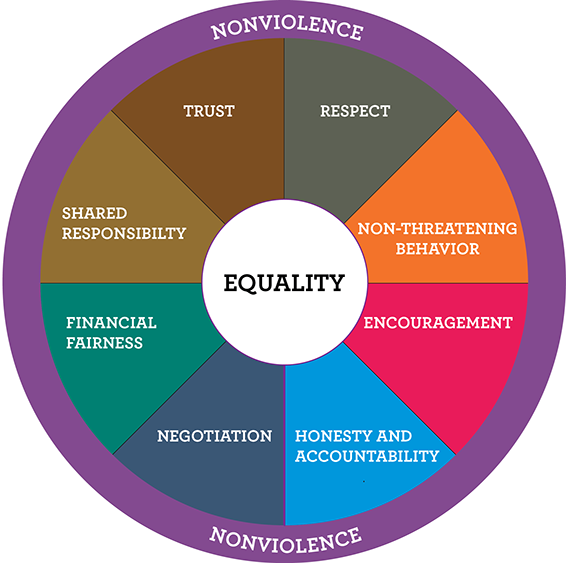
Remember that a relationship consists of two people. Both you and your partner should have equal say and should never be afraid to express how you feel. It’s not just about speaking up for yourself - you should also listen and seriously consider what your partner says.
Every relationship has arguments and disagreements sometimes - this is normal. How you choose to deal with your disagreements is what really counts. Both people should work hard to communicate effectively. Learn more about healthy relationships by exploring the equality wheel.
Dating abuse is a pattern of destructive behaviors used to exert power and control over a dating partner. While we define dating violence as a pattern, that doesn’t mean the first instance of abuse is not dating violence. It just recognizes that dating violence usually involves a series of abusive behaviors over a course of time.
Warning Signs of Abuse
Because relationships exist on a spectrum, it can be hard to tell when a behavior crosses the line from healthy to unhealthy or even abusive. Use these warning signs of abuse to see if your relationship is going in the wrong direction:
- Checking your cell phone or email without permission
- Constantly putting you down
- Extreme jealousy or insecurity
- Explosive temper
- Isolating you from family or friends
- Making false accusations
- Mood swings
- Physically hurting you in any way
- Possessiveness
- Telling you what to do
- Pressuring or forcing you to have sex
- Tips for Supporting Survivors
Helpful:
- Maintain a calm manner
- Listen without interrupting
- Let them know it is not their fault
- Educate on options & resources
- Allow them to make their own choices
- Allow expression of feelings
- Set judgments aside
Not Helpful:
- Do not blame or question their actions!
- Do not ask what or why questions
- Why did you drink so much?”
- Why did you go to their room?”
- Do not ask for details or too many probing questions
- Do not tell them what to do
- Do not minimize their feelings
- “It is ok now”
- “I know just how you feel”
- Understanding Trauma
CSUSM's Trauma Informed Practice
CSUSM encourages people to bring a support person with them when they meet with various resources on campus or in the community. In addition to providing comfort and reassurance, the support person can help by taking notes and helping recall what was discussed in a meeting since absorbing information is very difficult following a trauma. Support and reporting resources on campus also provide information in writing so people have something to refer to regarding next steps for support following the meeting with that resource. There are a variety of resources on campus that can help if you are struggling to manage symptoms of trauma. See the “Find Support” section of this webpage.
Possible Symptoms of Trauma
Sexual violence can have cognitive/psychological, emotional, and physical effects on a survivor. These effects aren’t always easy to deal with, but with the right help and support they can be managed. Learning more can help you find the best form of care to begin the healing process. Below are some symptoms that someone could experience:
Cognitive/Psychological
- Memory lapses, especially about the trauma
- Difficulty making decisions
- Decreased ability to concentrate or focus
- Feeling distracted
Emotional
- Depression, spontaneous crying, despair and hopelessness
- Anxiety
- Panic attacks
- Fearfulness
- Compulsive and obsessive behaviors
- Feeling out of control
- Irritability, anger and resentment
- Emotional numbness/no reaction
- Withdrawal from normal routine and relationships
Physical
- Eating more or less than usual
- Sleeping more or less than usual
- Low energy
- Chronic, unexplained pain
- Exaggerated startle response/feeling jumpy
Definition of Terms
You may hear words that refer to some common reactions following a trauma. Here are some definitions to help clarify these terms:
- Flashback: Temporarily losing touch with reality and feeling as if you are reliving the trauma.
- Hypervigilance: Being overly aware of surroundings, as if all of your senses are on high alert. Having flashbacks or feeling overwhelmed by emotions about the experience.
- Intrusive Thoughts or Memories: Thoughts or memories of the trauma that are overpowering, making it difficult to think of anything else.
- Trigger: Internal or external reminder cues of the trauma. Can occur in any of the 5 senses.
All of the above are normal reactions to a traumatic event. They take us out of the present and back to the time of the traumatic incident.
Managing Trauma
Flashbacks, hypervigilance, intrusive thoughts or memories, and triggers are normal reactions to a traumatic event. They take us out of the present and back to the trauma incident. To manage them, try to focus on the present (not the trauma). Here are several strategies that have worked for some people:
- Take 3 slow, deep breaths
- Try doing an activity that changes your current experience in any of your 5 senses:
-
- Sight – What do you see in the room? Name 5 things.
- Taste – Suck on candy, drink something cold or hot, eat something sweet or sour, suck on ice, gum
- Touch – Varying textures, such as beads, chains, blankets, corduroy clothes; pets; hug a safe person if you have their permission
- Smell – Flowers, aromatherapy, laundry detergent, candles, lotions, your favorite foods
- Sound – Safe person’s voice, your favorite music, white noise machine with pleasant sounds such as birds or the ocean
If an activity in one sense does not work, try another. Sometimes it takes a few tries.
Following a trigger, flashback, or intrusive memory, it’s also helpful to do something to comfort or distract yourself, such as:
- Listen to music
- Curl under a blanket
- Cuddle with a pet
- Take a bath
- Light candles or incense
- Use art, collaging, journaling, or other creative outlets
- Call a support person and talk about what is happening
- Engage in spiritual practice
- Drink hot tea or hot chocolate
- Watch non-triggering TV/movie
- Read a book
- Exercise
- Clean
- Make a list of things to do
- Call a support person and talk about other things
- Engage in normal routine
- Window shop
Symptoms of trauma can vary over time. There is no timeline for healing from a traumatic experience. That process can look different for everyone. Over time, you will learn the activities that work the best for you.
- Violence and Identities
Anyone can be affected by harassment, sexual violence, dating violence, domestic violence or stalking, regardless of their gender, race, ability status, or any other identity. However, there are some people with marginalized identities who face higher rates of violence or additional barriers to seeking help. There are various on campus resources available to students if they need assistance in seeking support.
On Campus Resources
The following resources are not confidential (reporting to these resources will result in a mandatory report to the Title IX Coordinator). Also, the following are examples of some on campus resources available to students, but this list is not exhaustive of all on campus resources.
- Black Student Center
- California Indian Culture and Sovereignty Center
- Cross Cultural Center
- Disability Support Services
- Gender Equity Center
- Latin@ Center
- LGBTQA Pride Center
- Gender Inclusive Restroom Map
- Click on Restrooms
- Click on Gender Inclusive Restrooms
- Office of Diversity, Educational Equity and Inclusion