

 myCSUSM






BPI @ CSUSM
Learn necessary tools and competencies to conduct Business Process Improvement (BPI) sessions with stakeholders across campus. Applicants will be expected to participate in a deep dive training program to learn how to identify, define, analyze and potentially improve business processes, and then deploy these skills cross-campus to assist in continuous improvement efforts.
- What is the anticipated time commitment for a BPI practitioner?The BPI training program involves about 25 hours of hands-on, in-person training that span over 6 weeks.
- What is the role of a BPI practitioner?
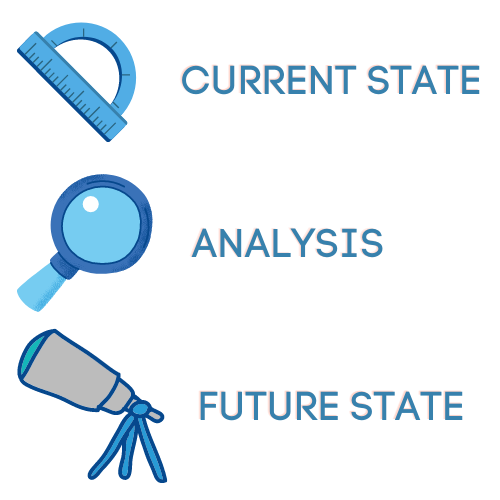
- Commit to a program-long training in BPI methodology including Current State, Analysis, and Future State.
- Master facilitation of exploration and discovery sessions using BPI methodology; understand the administration and communication necessary to facilitate a positive experience for participants and stakeholders
- Practice the development and delivery of BPI deliverables
- Communicate and normalize the importance of BPI methodology and jargon to other campus constituents
- Apply BPI methodology effectively in your department and appropriate arenas
- Help foster change and continuous improvement at CSUSM
- What is the benefit of training in BPI?
- Develop professionally and grow facilitation competencies for small and large group sessions
- Receive personalized feedback (written and verbal) during your training
- Master BPI methodology, a skillset useful in many professional settings
- Gain train-the-trainer competencies to lead others through BPI @ CSUSM
- Work closely with cross-functional teams and departments at CSUSM
- Learn about transformation, change, continuous improvement, and gain skills to be a change agent on campus
- What are desired characteristics of effective practitioners?
- Ability to engage stakeholders from first contact and throughout the entire process.
- Professional presence and demeanor in front of a crowd of stakeholders.
- Clearly communicate (in various forms) the structure, expectations, and goals of the practice.
- Maintain and inspire positive energy throughout sessions.
- Strong meeting facilitation skills and interpersonal communication.
- Ability to document and take notes clearly and neatly.
- Comfortable with asking clarifying or inspiring questions during sessions
- Have the time and workload availablity to commit the hours necessary to succesful training and facilitation of BPI sessions.
- Practitioners should have the ability to:
- Speak clearly and loudly.
- Ask follow up and clarifying questions.
- Summarize information in a concise manner quickly.
- Consolidate multiple ideas into one actionable step.
- Write/type legibly and quickly.
- Be personable and engaging and instill excitement about a new process.
- Accept and integrate feedback from stakeholders.
- Think on the spot and flexibly transition as needed.
- Attend to the big picture as well as intricate details.
- Visio Tutorial