

 myCSUSM






Facility Dog Program at CSUSM
The Power of Paws - Meet Frank!
Frank is CSUSM's specially trained Facility Dog, supporting student well-being, connection,
belonging, and campus engagement through intentional programming across the university.
As CSUSM's first Facility Dog, Frank partners with students, faculty, staff, and campus
programs to create meaningful moments of connection - whether supporting mindfulness
practices, helping students navigate stressful moments, visiting classrooms and campus
events, or simply providing a welcoming place to pause and reset.
Frank is more than a dog to pet - he's here with a purpose.
Meet Frank - CSUSM's very own Facility Dog!
Interacting with Frank can help shift your nervous system from stress to calm. A moment
of connection with Frank can create an opportunity to pause, slow down, and reconnect
with the present moment. Sometimes, a few minutes is all it takes to interrupt the
rush of the day. A gentle interaction with Frank can offer students a moment to breathe,
connect, reset, and return to their day feeling a little more grounded.
From Stress to Calm
A moment of connection with Frank can create an opportunity to pause, slow down, and reconnect with the present moment. Sometimes, a few minutes is all it takes to interrupt the rush of the day. A gentle interaction with Frank can offer students a moment to breathe, connect, reset, and return to their day feeling a little more grounded.
Stress Mode
- Stress hormones such as cortisol and adrenaline can increase
- Heart rate and blood pressure may rise
- Muscles can tense
- Breathing may become faster and shallower
- Attention can narrow
- Feelings of overwhelm or disconnection may increase
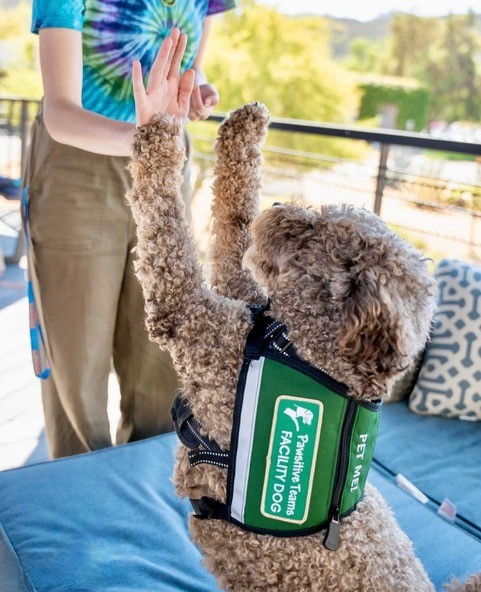
Calm Mode
- Heart rate and blood pressure may decrease
- Muscles can begin to relax
- Breathing may slow and deepen
- Attention can return to the present moment
- Social connection may increase
- Feelings of safety, belonging, and well-being may be supported
The Frank Pause
We arrive
Stress shows up in the body and mind. We feel rushed, overwhelmed, or disconnected.
We pause
We pet. We breathe. We connect with Frank. For the moment, there is no where else we need to be.
The shift
Touch, connection, and mindful attention can help interrupt the stress response and support the body's restorative processes.
We restore
Body and mind begin to settle. We may feel calmer, clearer, and more connected.
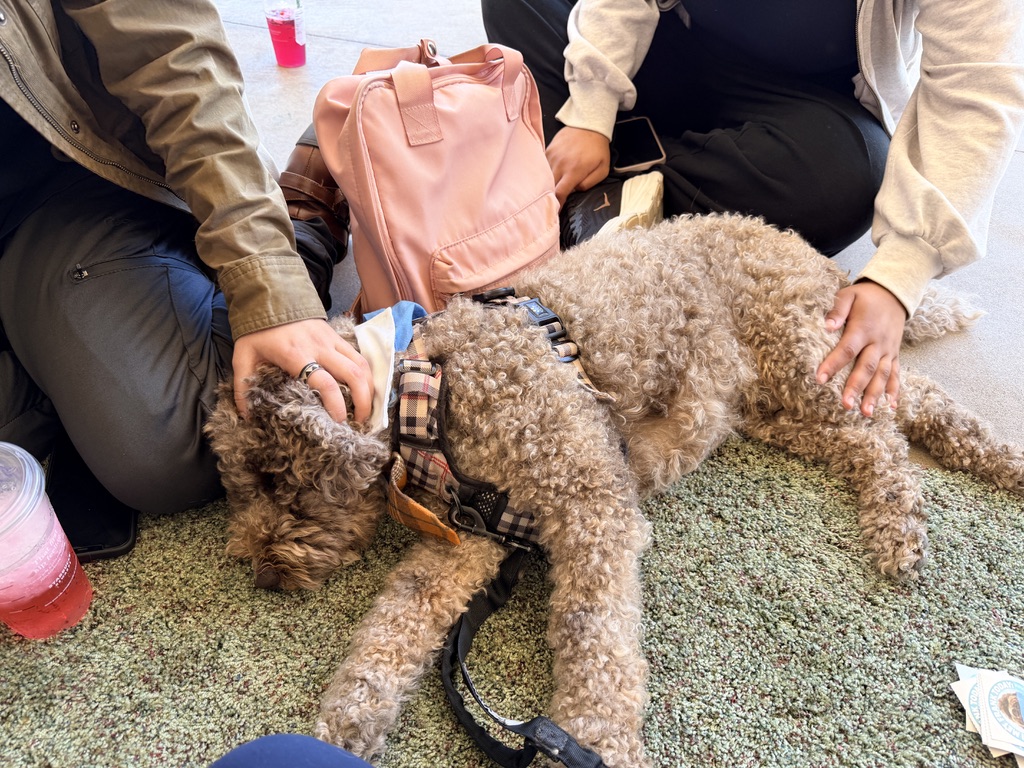
Human-animal interaction can support well- being
Research on human-animal interaction suggests that brief, intentional interactions with dogs can support reduced perceived stress and anxiety, improved mood, and feelings of connection and well-being. Studies conducted specifically with university students have found benefits following even short interactions with trained dogs, supporting their use as one component of campus wellness programming.
Sources: Sim et al., 2025; Yotanyamaneewong et al., 2025; Peel et al., 2023; Huber et al., 2022.
At CSUSM, Frank's role extends beyond brief visits. His ongoing presence allows the university to explore how an embedded Facility Dog can support connection, belonging, stress management, and student well-being over time.
Student Voices
"Frank helped me feel safe enough to ask for help"
"I came for the dog and stayed for the support"
"I miss my furry friend and petting Frank helps!"
Thank you Frank!


FAQ
- Can I pet Frank?Yes! Frank is here to provide comfort, support, and a safe space to relax. Please join us at our weekly events on campus or request a visit. Frank can't wait to meet you!
- Is Frank hypoallergenic?Frank is a Goldendoodle, which means he does not have fur and has much less dander than dogs who have fur. Frank has hair. He gets baths on a weekly basis and is groomed regularly to help keep him - and YOU - healthy!
- Can Frank come to our event?
Yes! Please email Tracy (tdaly@csusm.edu) to requst a visit from Frank.
Tracy (Frank's handler/mom) is happy to bring him to you for a "stress-less" session, education on what Frank does for our campus community, or other topics of your choice. - What if I’m nervous around dogs?That's okay! Some people get nervous around dogs and other animals. There may have been previous experiences that make people nervous and uncomfortable, or maybe you didn't grow up with pets, so you're unsure. Frank is a gentle soul and has been trained to be a support for you. If you're nervous, just let us know and we can help you to feel more comfortable with slow, gentle introductions.
- How is Frank trained?Frank has ongoing training. He successfully passed the Canine Good Citizen test, he has been trained and certified as a Therapy Dog and Facility Dog, and is the goodest of boys. He is also a Therapy Dog at Rady Children's Hospital, where he visits with kiddos, families, and medical staff to provide comfort and a good distraction from the scary parts of being in a hospital.
- Does Frank ever get overwhelmed or need a break?Yes. Frank is a working dog, but he is a dog first. His comfort and well-being are continuously monitored, and he is provided with breaks, rest, choice, and opportunities to disengage from interactions. His welfare is an essential part of responsible facility dog practice.
- Is it safe to have a dog on campus?
Frank’s presence at CSUSM is supported by a comprehensive campus risk assessment conducted by Integrated Risk Management and Safety, Health, and Sustainability. The review considered Frank’s training, handler qualifications, insurance coverage, health and hygiene practices, allergies and phobias, participant safety, animal welfare, and procedures for safe campus interactions.
Following this review, the university’s risk and safety teams recommended moving forward with the Facility Dog Program and determined the residual risk to be low when established safeguards are followed.
Frank’s work on campus continues to prioritize the safety, comfort, choice, and well-being of both our campus community and Frank himself. Interaction with Frank is always voluntary, and we recognize that members of our campus community may have allergies, cultural considerations, previous experiences with animals, or simply prefer not to interact with dogs. Personal space and individual choice are always respected.
Frank’s presence at CSUSM is intentional - supported by specialized training, thoughtful planning, university review, and an ongoing commitment to creating safe, welcoming, and meaningful opportunities for connection across our campus community.
For additional information about the university review process and safeguards established for the program, please view the Facility Dog Risk Assessment.