

 myCSUSM





TOM in Our Community
Campus Outreach and Team Building in Atlanta
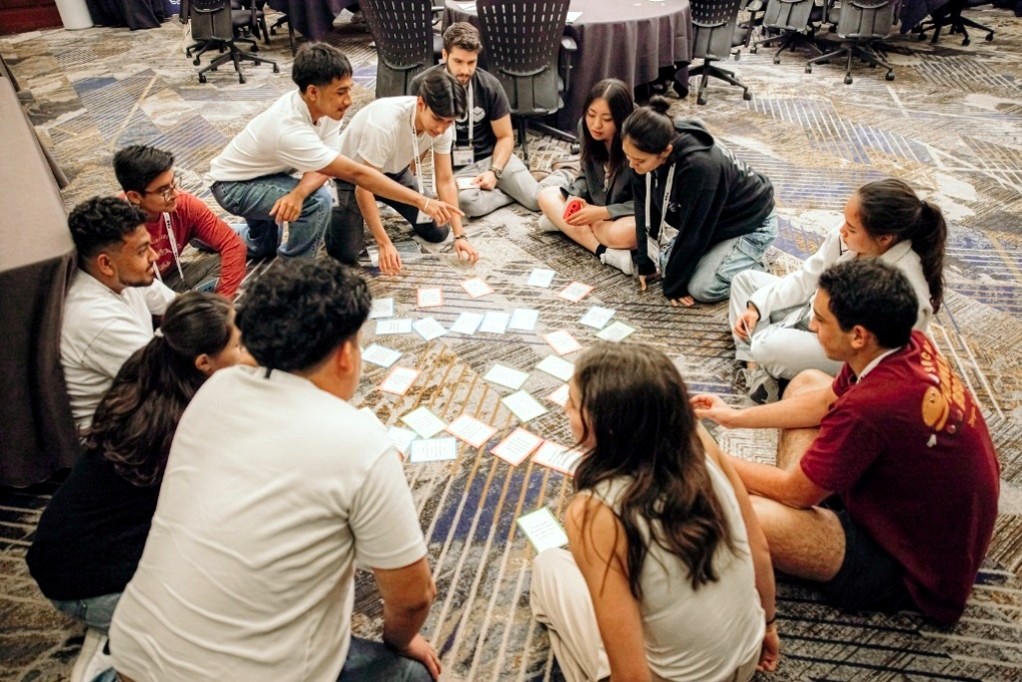
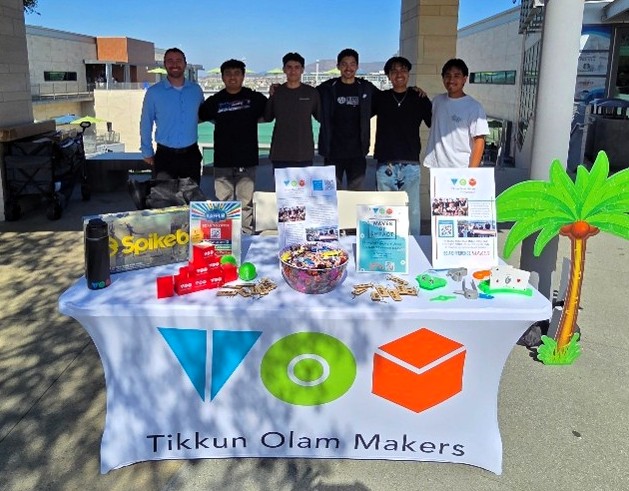
Campus outreach creates an easy entry point for students from different majors and backgrounds to learn about TOM, meet the team, and see how they can get involved. Events like the TOM Pop-Up help make the program more visible across campus while creating space for conversation around inclusive design and community-based projects. They also give current members a chance to share what they are working on and invite new students into the group.
Community
Before the
Project
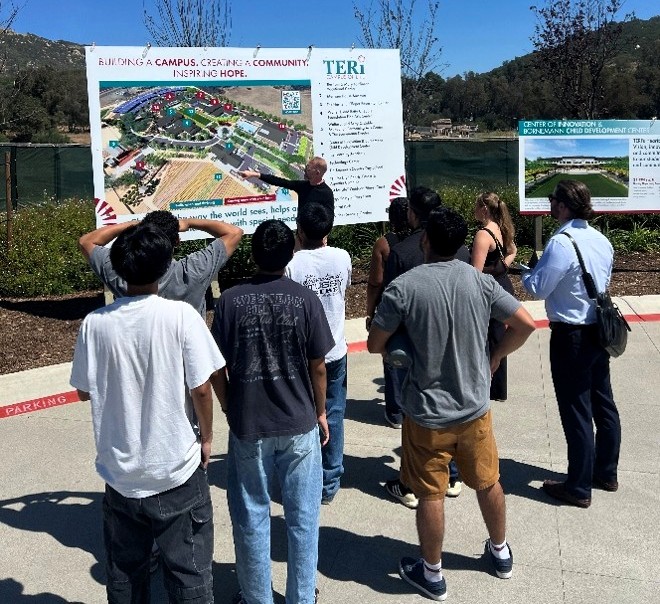
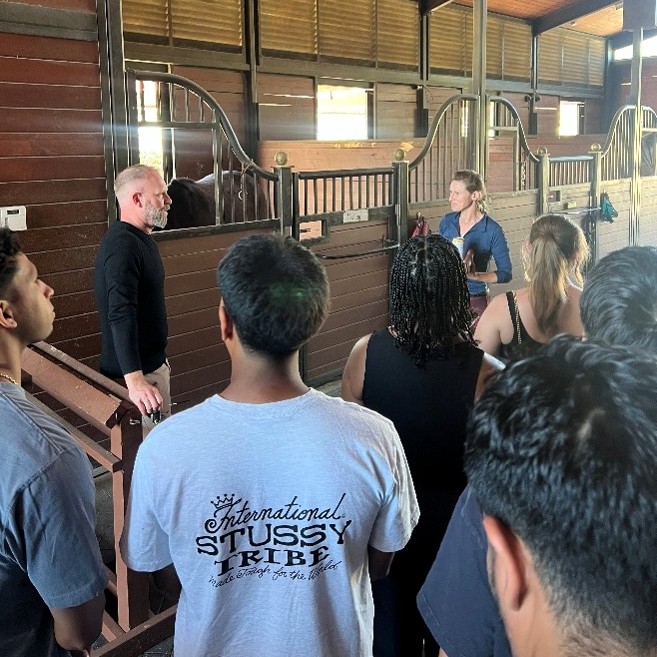
Partnership development with local non-profit, TERI happens through shared experiences. TERI is an organization dedicated to providing lifelong learning, specialized services, and family support for the special needs communities. TOM activities create informal spaces where CSUSM students and members of the TERI community can spend time together, build relationships, and better understand one another before a design challenge ever reaches the prototyping stage. These experiences strengthen the TERIxTOM partnership and help students approach future projects with community members as active collaborators in the design process.
Design Starts With a Person
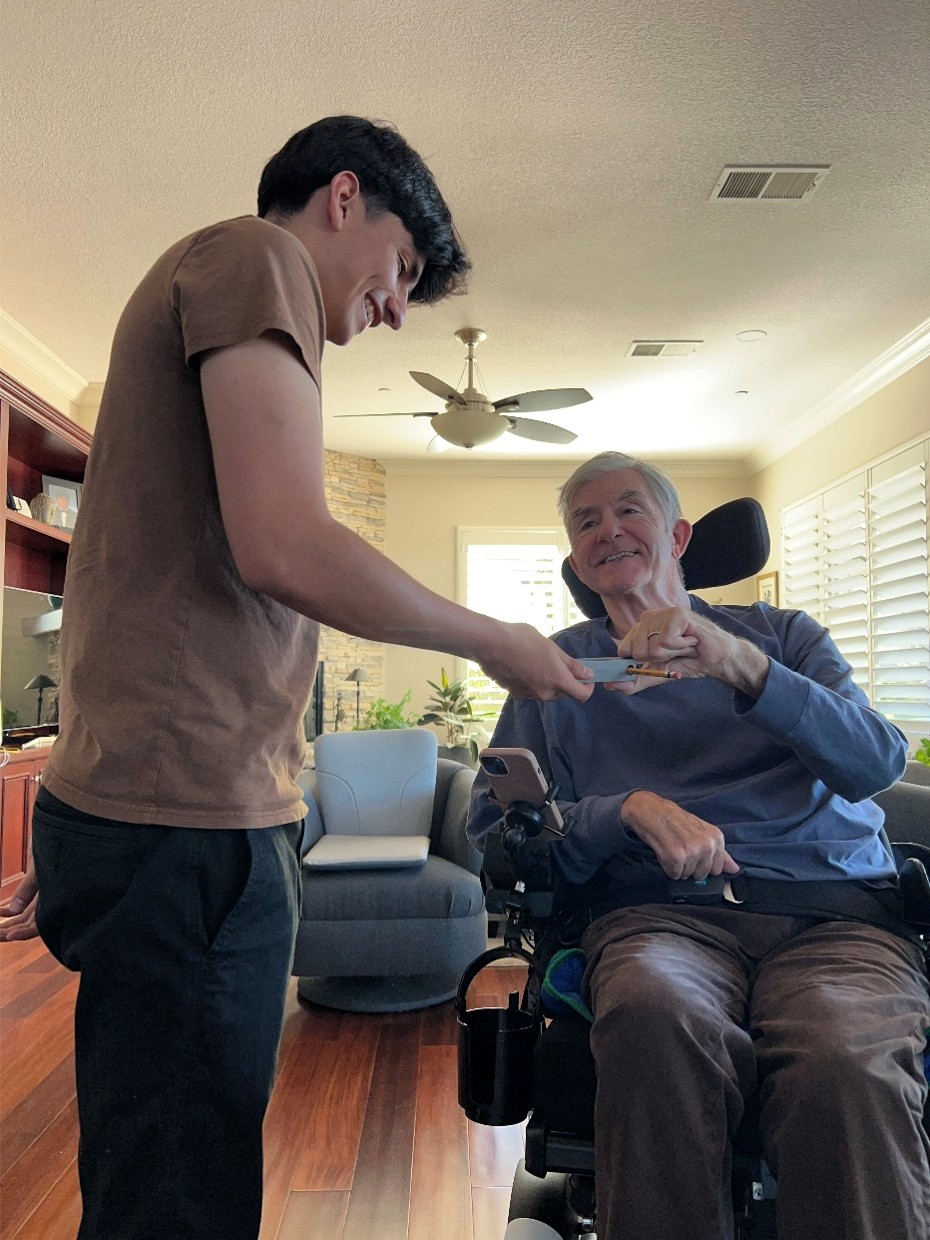
At the center of TOM is a simple idea. People who experience accessibility challenges should be active partners in creating the solutions intended for them. Students have begun working directly with community members to understand specific needs and develop personalized solutions. These collaborations give students a different type of design experience. Success is no longer defined simply by whether something can be built. It is determined by whether the solution fits the person, the context, and the everyday activity it is intended to support. One example is the team's work with Tim. Through direct interaction and testing, students explored ways to make everyday activities easier and more accessible. A customized pencil-holding solution emerged through this process, demonstrating how even a relatively small design can affect independence and participation.
From Open-Source Design To Working Prototype: The Automatic Grabber
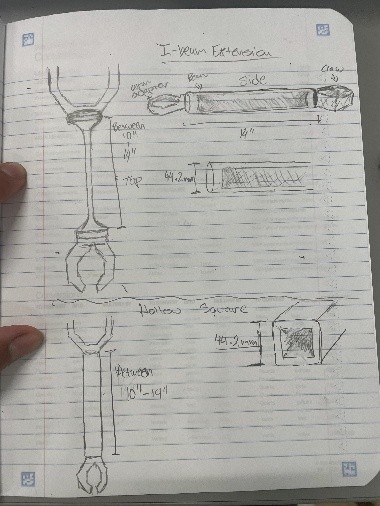
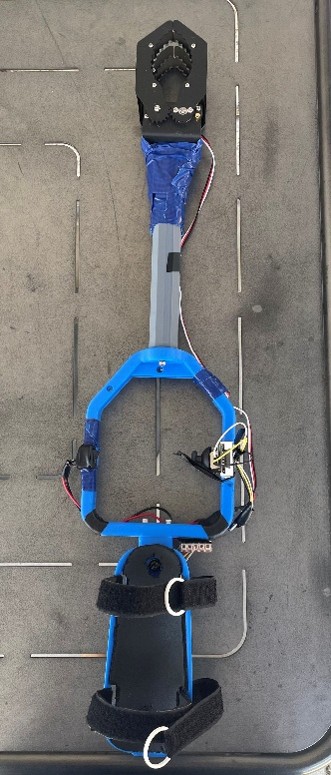
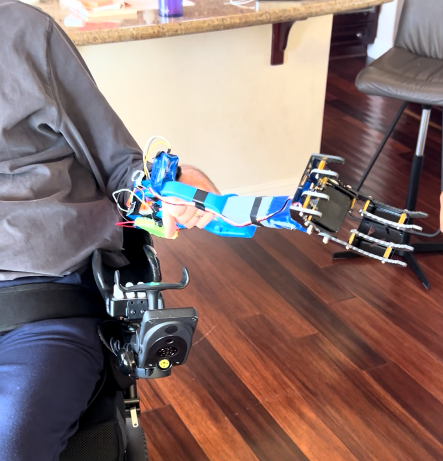
TOM also gives students opportunities to learn from existing open-source assistive technology and translate those designs into working prototypes. The Automatic Grabber project introduced students to a switch-powered assistive device designed to help individuals with reduced hand control retrieve objects more independently while reducing the physical effort associated with traditional grabbers. Building the device required students to work across several stages of the making process, including interpreting an existing design, 3D printing components, assembling mechanical parts, integrating electronics, troubleshooting, and refining the prototype. The result is important, but so is the process. Students experience firsthand how engineering, creativity, iteration, and accessibility intersect when a design must ultimately work for a person.
TERI × TOM Beach Event
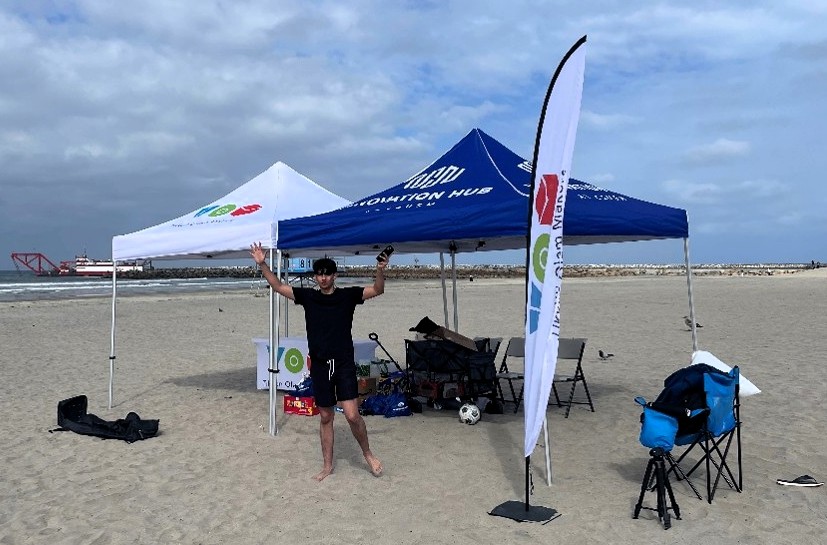
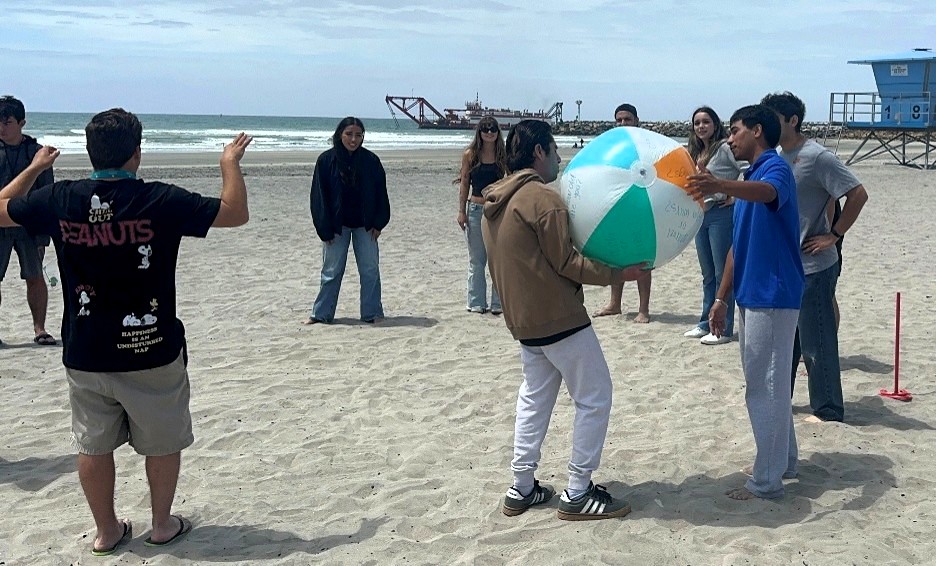
The TERI × TOM Beach Event brought students and community members together in a more informal setting outside the classroom and design space. Through shared activities and time together at the beach, students had an opportunity to build relationships, learn more about the people involved in the partnership, and strengthen the connection between TOM @ CSUSM and the TERI community. Events like this are an important part of the broader collaboration because they give students context before moving into project development. Building familiarity and trust helps future design work begin with a stronger understanding of the everyday experiences that can shape a project.

SD Service Jam 2026
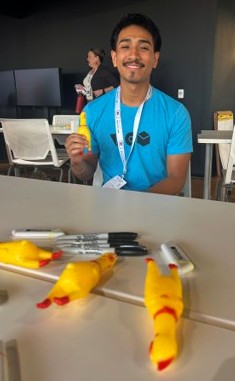
TOM @ CSUSM participated in the San Diego Service Jam, a 48-hour design event
focused on
researching real challenges. The event gave students an opportunity to work through
a rapid
design process alongside participants from across the San Diego community, with
an
emphasis on learning through iteration. The fast-paced format also encouraged
experimentation and helped students become more comfortable developing ideas that
may
begin rough but improve through collaboration and testing.
Del Mar Electronics & Mfg Show
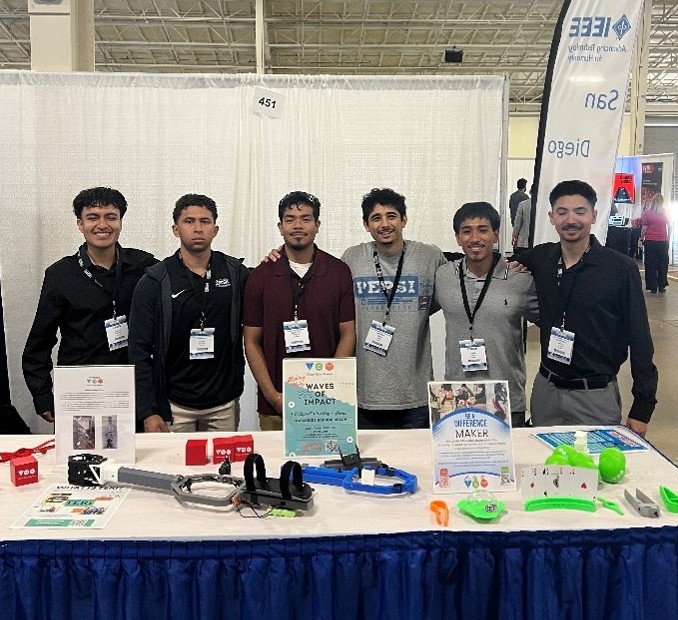
TOM @ CSUSM participated in the Del Mar Electronics & Manufacturing Show, a regional event bringing together professionals and organizations from the electronics, engineering, medical, biotech, and manufacturing sectors. The show provided students with an opportunity to share TOM projects in a professional setting while learning more about current technologies, fabrication methods, engineering services, 3D printing, and manufacturing resources. Presenting TOM projects at the event also gave students experience communicating the purpose behind their designs to other industry professionals. The experience helped students see how assistive technology projects connect with the larger design and manufacturing process and created opportunities to learn from people working across industry.
Collaborative Effort Helps SLP Alumni's Daughter
For Lorin Keehr, Cal State San Marcos is more than the university where she earned
her master's degree in speech-language pathology. It's a community where she continues
to find support nearly a decade later.
Keehr, who graduated in 2016, now works as a speech-language pathologist in the San
Marcos Unified School District (SMUSD). She has remained closely connected to CSUSM,
regularly supervising SLP graduate students working as interns in the district.
In somewhat of a full circle moment for Keehr, she now sends
her daughter to the CSUSM SLP clinic where she once trained as a graduate student.

Keehr’s daughter Lyra was born with Nicolaides-Baraitser syndrome, a rare genetic condition that affects how a child grows and develops. It can cause learning difficulties, seizures, delayed speech, and unique physical features like coarse facial features or small hands and feet.
Though Lyra will turn 3 years old in September, she weighs just 15 pounds and is still learning to walk independently. When Lyra's physical therapist recommended a walking device to improve her mobility, the SLP clinic was there to help. Lyra’s tiny frame meant a standard walking device wouldn’t work, and a custom-made one came with an exorbitant price tag.
One of Keehr’s SMUSD coworkers suggested she talk to CSUSM about the possibility of developing something. Laura Coca, CSUSM’s director of clinical education for the SLP department and one of Keehr’s mentors while she was a student, reached out to engineering professor Reza Kamali, who was the faculty adviser for the university’s chapter of Tikkun Olam Makers (TOM), an assistive technology organization that matches students with people living with neglected disabilities.
“It was such a wonderful opportunity for students to collaborate,” Coca said. “I cannot thank Reza and TOM enough. They were just so fast and so comprehensive.” Kamali and the TOM team had several meetings with Keehr and Lyra’s physical therapist. Less than four months later, they had created a lightweight walking device tailored for Lyra.
“These experiences offered a unique opportunity for students to engage in community-based projects where they could see firsthand how their knowledge and skills could be applied to create meaningful change,” Kamali said. “Watching their product go from an idea to a tangible device used by a child in need was an emotional and inspiring moment for everyone involved.” Keehr said the additional support has helped Lyra in many ways, including socially, with play skills that she’s learning from the SLP clinic and in her general mobility.
“I didn’t know what to expect, and that’s why I was pleasantly surprised,” Keehr said.“Since getting the trainer, she has been able to stand by herself for a few seconds. It’s definitely been helping with her development. "I'm just very grateful for both of those programs and what they're doing for the community. Trying to navigate the insurance world and all the paperwork and everything that comes with it, it's programs like the SLP clinic and TOM that make it just a little bit easier for families like ours. They’re people who have good hearts and just want to help their community. So I'm very grateful for making those connections and also being able to promote them to other families that I work with so that they can benefit from these services.”
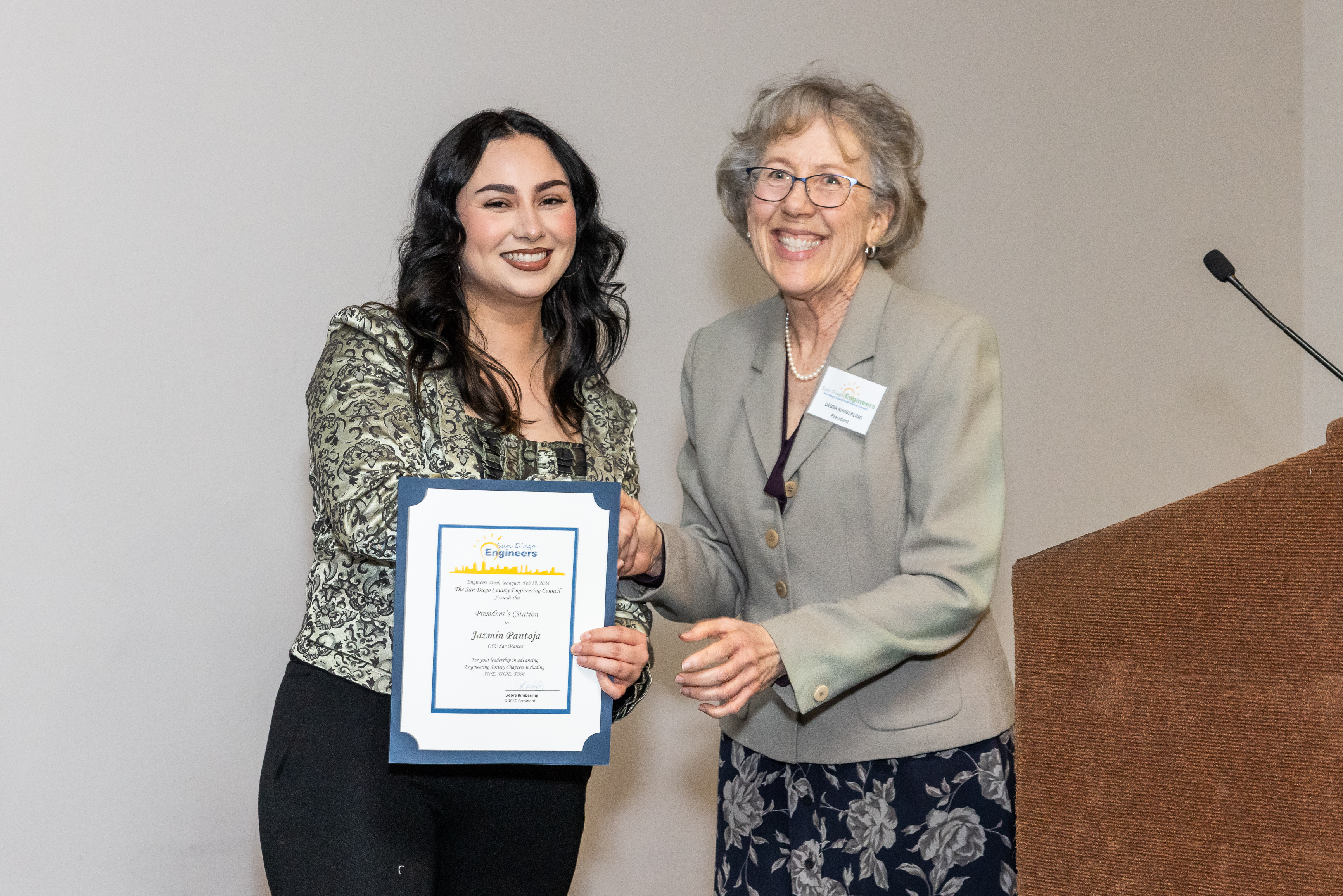
Jazmine Pantoja with the SDCEC President, after winning the President's Citation Award.
CCEC: President's Citation Award
Jazmine Pantoja, an exemplary electrical engineering student, has been honored with the prestigious President's Citation Award by the San Diego County Engineering Council at their annual award ceremony on February 19th, 2024. This recognition is a testament to her outstanding leadership and significant contributions to the advancement of the Tikkun Olam Makers (TOM) Club, Society of Women Engineers (SWE), and Society of Hispanic Professional Engineers (SHPE). Through her dedication and initiative, Ms. Pantoja has played a pivotal role in fostering an inclusive and supportive environment for aspiring engineers, thereby enriching the engineering community. Her efforts have not only facilitated greater engagement among her peers, but have also served to inspire and empower the next generation of engineering leaders.
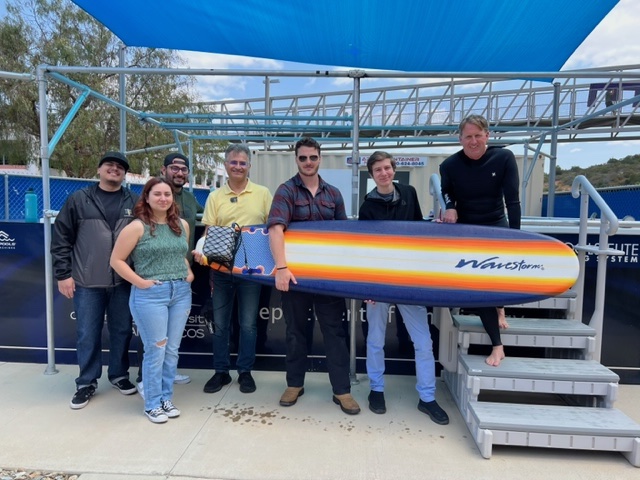
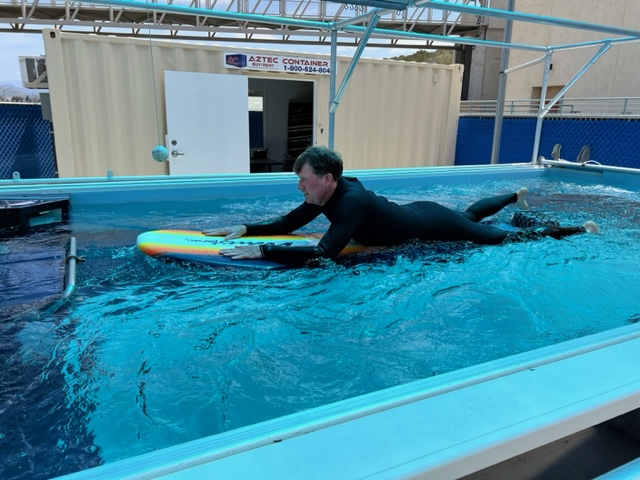
TERI Campus of Life Surfboard Project
The Teri Campus of Life is a dedicated organization providing housing and education for individuals with disabilities, ranging from 6 to 60 years of age. Their mission is to change the way the world sees, helps, and empowers individuals with special needs. Teri’s goal is to improve the quality of life for children and adults with developmental and learning disabilities, and to change the way the world sees them, allowing for inclusion within the community. Through support, advocacy, dedication, innovation, and resolve, TERI has brought opportunity and hope to countless individuals and families.
The Tikkun Olam Makers were excited to work on a project with the team at Teri to help one of their students learn to surf. Recognizing the challenges associated with learning to surf, the TOM group introduced an innovative solution: a motorized surfboard. This modification not only enhances the overall enjoyment of the surfing experience but also makes the learning process more accessible. The motorized surfboard addresses the inherent difficulty of surfing, providing a fun and simplified approach to overcoming this obstacle. Moreover, it aids instructors in teaching individuals with disabilities more effectively before transitioning to a traditional surfboard. This solution stands as an enjoyable and user-friendly alternative, contributing to a more inclusive and enriching surfing experience for individuals with disabilities.