

 myCSUSM






Feelings After Sexual Violence
LEAVE SITE
There is no "right" way to respond to sexual harm.
If you have experienced sexual assault, stalking, sexual harassment, relationship violence, sexual exploitation, or another form of sexual harm, your reactions are valid. Some people experience intense emotions immediately following an incident, while others may not experience distress until weeks, months, or even years later. Healing is not linear, and every survivor's journey is different.
The impact of sexual violence goes far beyond any physical injuries. Recovery takes time, and you can be left with many painful emotions and mental effects. Below are some common emotional, mental, and physical effects following experiences of sexual harm. Please note that this is not an exhaustive list, and a survivor may have other responses to trauma not shown here.
Common Emotional Responses to Sexual Violence
- Difficulty trusting others
- Anger and blame
- Shock
- Numbness
- Loss of control
- Disorientation
- Feeling that these reactions are a sign of weakness
- Helplessness
- Sense of vulnerability
- Fear
- Self-blame/guilt for “allowing” the crime to happen
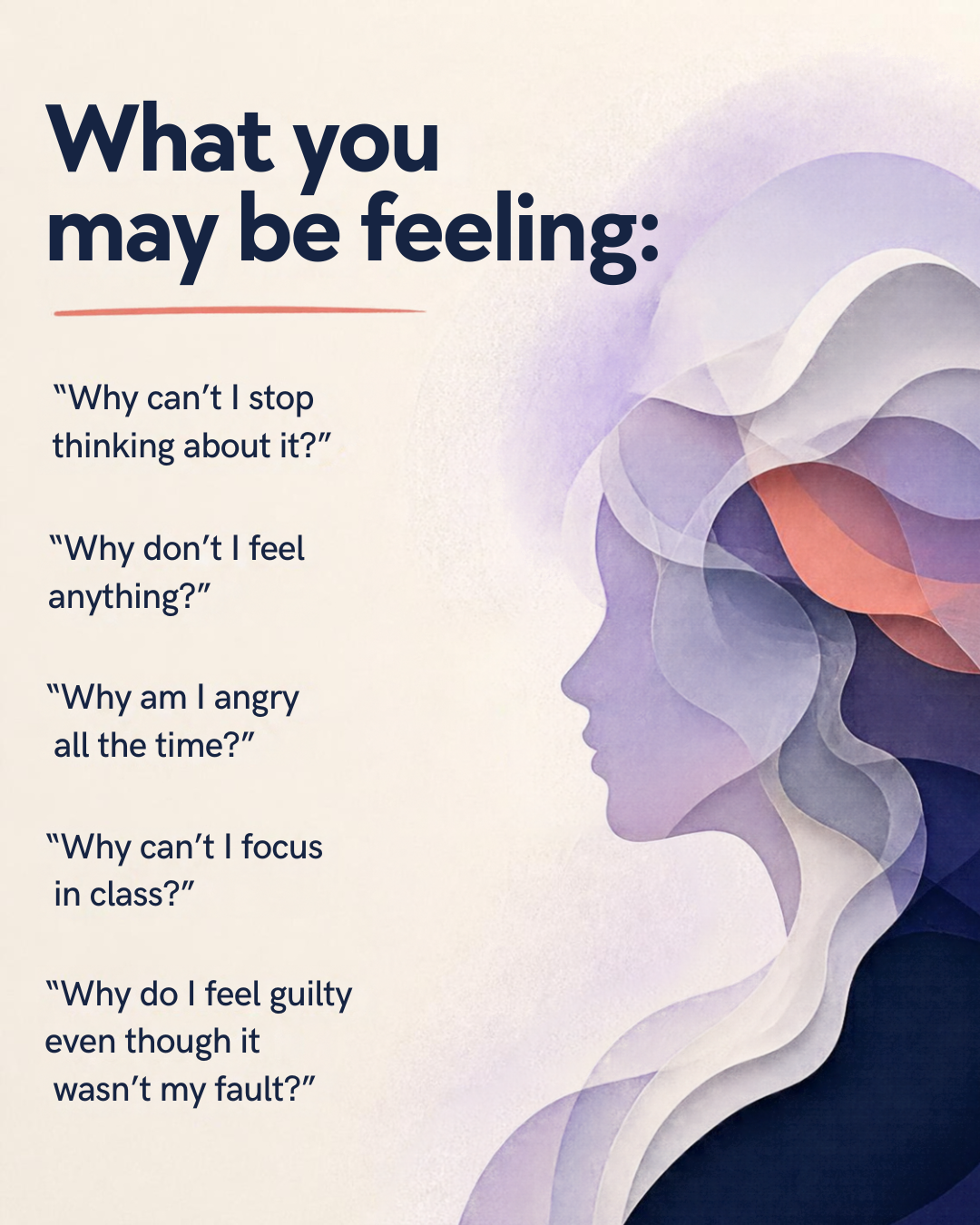
Common Mental Effects of Sexual Violence
- Post-traumatic stress disorder (PTSD), including flashbacks, nightmares, severe anxiety, and uncontrollable thoughts
- Depression, including prolonged sadness, feelings of hopelessness, unexplained crying, weight loss or gain, loss of energy or interest in activities previously enjoyed
- Suicidal thoughts or attempts. If you or someone you know is feeling suicidal, contact the National Suicide Prevention Lifeline at 1.800.273.8255.
- Dissociation, including not being able to focus on work or on schoolwork, as well as not feeling present in everyday situations
Common Physical Effects of Sexual Violence
- Bruising
- Bleeding (vaginal or anal)
- Difficulty walking
- Soreness
- Broken or dislocated bones
- Sexually transmitted infections and diseases
- Pregnancy
Trauma responses are normal responses to abnormal experiences.
You may experience many different emotions, or you may not experience any at all. Both are valid responses. Healing takes time, and support is available.
Other Common Experiences After Sexual Violence
- Drug or alcohol abuse
- Menstrual cycle or fertility problems
- Chronic fatigue
- Shortness of breath
- Muscle tension
- Involuntary shaking
- Changes in eating and sleeping patterns
- Sexual dysfunction
Impacts on Academic Success
Following sexual harm, students may experience:
- Difficulty concentrating
- Trouble attending class
- Changes in motivation
- Difficulty completing assignments
- Memory challenges
- Concerns about safety on campus
What Can Help?
- Talking with a trusted friend
- Connecting with a confidential advocate
- Counseling services
- Medical care
- Joining support groups
- Practicing self-care and self-compassion
- Establishing routines
- Using campus accommodations
|
|